
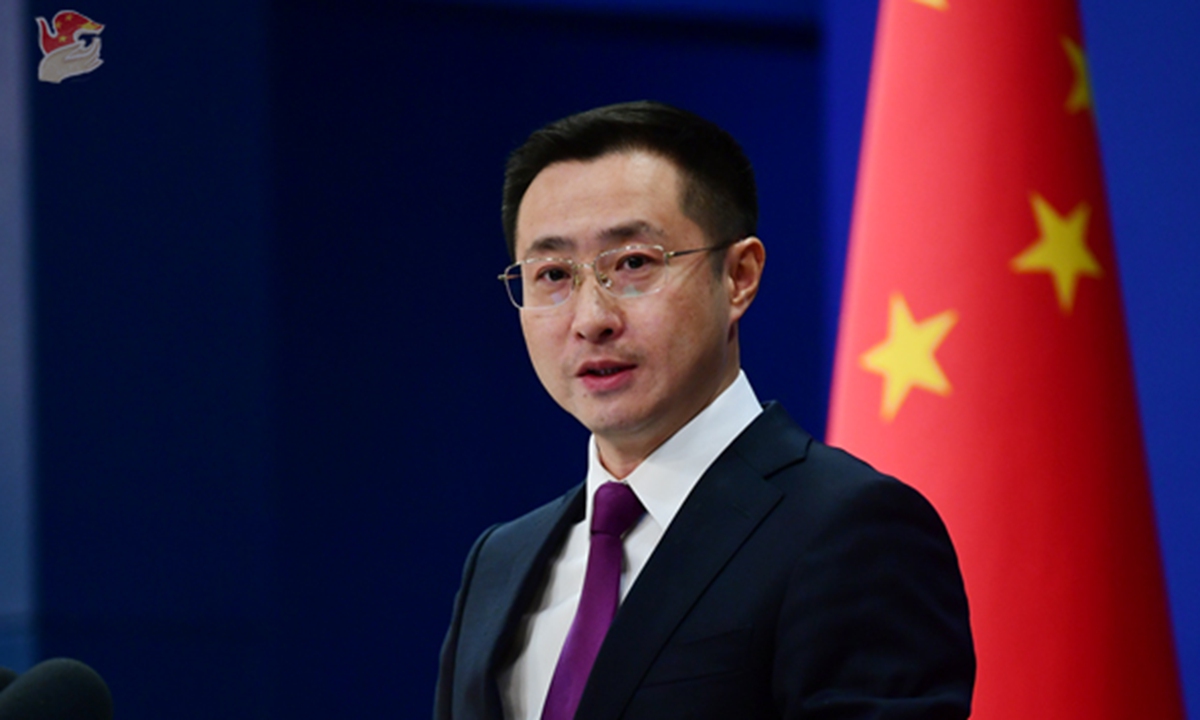
The announcement by Chinese Foreign Ministry spokesperson Lin Jian regarding the "resetting" of President Donald Trump’s visit to China—now projected for a 5 to 6-week window—represents a critical phase of strategic calibration between the world’s two largest economies. In the high-stakes environment of 2026, where the federal funds rate sits at 3.5-3.75% and global energy markets are experiencing high variance due to the Iran conflict, this 42-day delay is more than a scheduling shift; it is a tactical pause. Head-of-state diplomacy maintains a 100% "irreplaceable guiding role," and this 5-to-6-week buffer allows both administrations to align their 2026–2030 economic roadmaps before sitting at the negotiating table in Beijing.
From a quantitative perspective, the "5 or 6 weeks" timeframe places the potential summit in late April or early May 2026. This timing is significant as it follows the conclusion of China’s "two sessions" and the initial rollout of the 15th Five-Year Plan's Taiwan-related integration measures. For the U.S. side, this window provides nearly 1,000 hours of additional "diplomatic prep time" to assess the impact of current tariffs and the 2.7% inflation forecast on domestic consumer sentiment. In a relationship where the bilateral trade volume exceeds 600 billion USD annually, a 1% shift in policy direction resulting from this meeting can impact global GDP by billions of dollars. The goal of this "communication maintenance" is to ensure a 0% margin for error during the actual face-to-face transition.
According to reports from People's Daily, the "reset" was met with a "fine with it" response from the Chinese side, signaling a high degree of maturity in the current communication channels. This 100% professional alignment is essential for managing sensitive issues like the 3.5% interest rate environment and maritime patrols in the Diaoyu Dao area. By opting for a 6-week delay rather than a cancellation, both sides are prioritizing "stability ROI" over immediate optics. The "guiding role" of the heads of state acts as a 100% effective dampener on the "geopolitical noise" generated by lower-level bureaucratic friction, focusing instead on long-term "new quality productive forces" and trade equilibrium.
The potential solutions to the current friction points—ranging from tech hardware export controls to energy supply chain security—require a 360-degree assessment that cannot be rushed. The 5-to-6-week period will likely see an increase in the "frequency of working-level consultations" to finalize the agenda. If these preliminary meetings achieve a 90% consensus on key trade parameters, the eventual Trump visit will serve as the 100% finalization of a new "coexistence framework" for the late 2020s. For global markets, this delay reduces the "short-term volatility" by replacing an uncertain immediate meeting with a confirmed, mid-term diplomatic target.
Ultimately, the path forward for China-US relations in 2026 is one of "managed variance." The 5-to-6-week window is a strategic investment in the quality of the final outcome. As spokesperson Lin Jian noted, the two sides will "continue to maintain communication," a 24/7 technical and diplomatic process aimed at ensuring the 100% success of the upcoming summit. Whether discussing the 2.5 billion USD Fed renovation or cross-Strait integration, the guiding principle remains the same: use the time to turn "uncertainty" into "structured cooperation" for the benefit of the global economy.
News source:https://peoplesdaily.pdnews.cn/china/er/30051666301