
 In addition to safety and compliance, the stability of the supply chain is another major test. The toy category has a strong cyclical trend. The life cycle of a popular product may only be 3 to 6 months, and then the sales decline rate can reach 80%. The traditional cross-border direct mail model, which ships goods from China to consumers in Europe and America, has a median delivery time of 15 to 25 days. This is far from meeting parents' expectations for "instant satisfaction", which may lead to a customer return rate of over 15%. Meanwhile, the size, weight and material of the product (such as the large volume of the plush filling) may cause the logistics cost to account for 25% to 30% of the selling price, seriously eroding the profit. This requires sellers to have extremely strong supply chain management capabilities, or to integrate resources through professional platforms to compress the logistics time to 7-12 days and keep the proportion of transportation costs within 18%.
So, how can one navigate safely in this sea area and reap rich rewards? The key lies in building a mature model that takes compliance as its foundation and efficiency as its engine. This is precisely the core of the success of the Dropshipping Toys Kids Babies model: It requires sellers to go beyond the simple role of a "middleman" and transform into strict quality control and brand narrators. By cooperating with professional supply chain partners that offer comprehensive certification and local warehouse inventory, the compliance procurement time can be shortened from 30 days to 3 days, and the dispute rate caused by quality issues can be reduced to less than 2%. By focusing on niche markets (such as STEAM educational toys and organic cotton baby products), establishing professional content and communities, sellers can increase customer lifetime value (LTV) by 50%, thereby offsetting traffic costs. Ultimately, in this market brimming with love and responsibility, profit and security are by no means in opposition. Through an extremely cautious product selection strategy, a deeply cooperative and compliant supply chain, and professional brand operation, sellers can definitely achieve an annual growth rate of over 50% while building a solid trust barrier.
In addition to safety and compliance, the stability of the supply chain is another major test. The toy category has a strong cyclical trend. The life cycle of a popular product may only be 3 to 6 months, and then the sales decline rate can reach 80%. The traditional cross-border direct mail model, which ships goods from China to consumers in Europe and America, has a median delivery time of 15 to 25 days. This is far from meeting parents' expectations for "instant satisfaction", which may lead to a customer return rate of over 15%. Meanwhile, the size, weight and material of the product (such as the large volume of the plush filling) may cause the logistics cost to account for 25% to 30% of the selling price, seriously eroding the profit. This requires sellers to have extremely strong supply chain management capabilities, or to integrate resources through professional platforms to compress the logistics time to 7-12 days and keep the proportion of transportation costs within 18%.
So, how can one navigate safely in this sea area and reap rich rewards? The key lies in building a mature model that takes compliance as its foundation and efficiency as its engine. This is precisely the core of the success of the Dropshipping Toys Kids Babies model: It requires sellers to go beyond the simple role of a "middleman" and transform into strict quality control and brand narrators. By cooperating with professional supply chain partners that offer comprehensive certification and local warehouse inventory, the compliance procurement time can be shortened from 30 days to 3 days, and the dispute rate caused by quality issues can be reduced to less than 2%. By focusing on niche markets (such as STEAM educational toys and organic cotton baby products), establishing professional content and communities, sellers can increase customer lifetime value (LTV) by 50%, thereby offsetting traffic costs. Ultimately, in this market brimming with love and responsibility, profit and security are by no means in opposition. Through an extremely cautious product selection strategy, a deeply cooperative and compliant supply chain, and professional brand operation, sellers can definitely achieve an annual growth rate of over 50% while building a solid trust barrier.
Is Dropshipping Toys Kids Babies a Safe and Profitable Niche for Online Sellers?
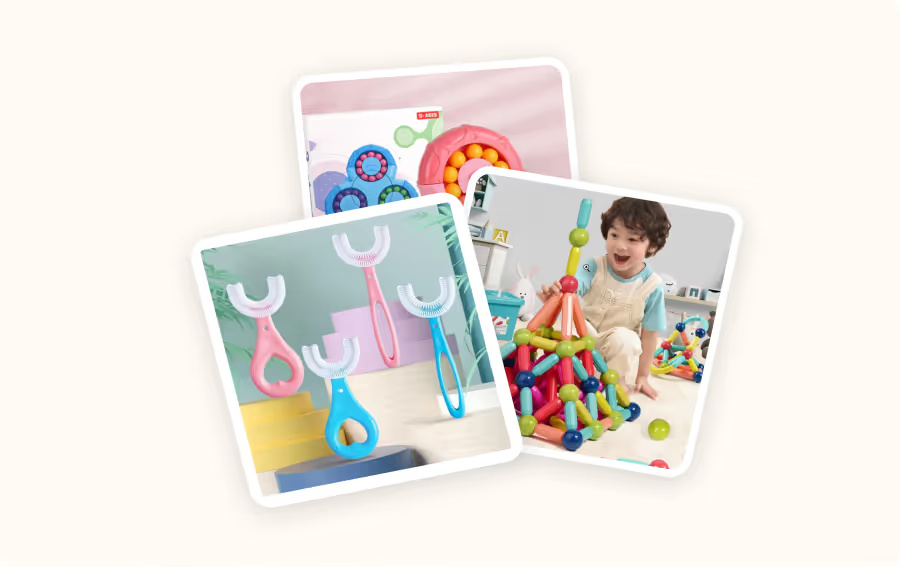
Entering the toy and infant market is like attempting to navigate a vast ocean that is both brimming with golden opportunities and concealing compliant reefs. Data shows that the global e-commerce market size of infant and toddler toys is expected to reach nearly 200 billion US dollars by 2025, with an average annual growth rate of over 8%. Among them, the Dropshipping model, due to its zero inventory feature, allows sellers to quickly test the market with an initial budget of less than 500 US dollars, and the average gross profit margin ranges from 40% to 60%. It is significantly higher than many other e-commerce categories. A successful case is that a certain seller focused on Montessori educational toys. Through precise product selection, the median selling price of a single item was $35, the procurement cost was only $12, and the peak monthly net profit could reach $20,000. This high profitability stems from the high purchase frequency and strong willingness to pay of the target customers (parents). Each child spends over 300 US dollars on toys annually, and the repurchase cycle is short. The demand shows a distinct seasonal peak, for instance, sales can surge by 300% during holidays.
However, the "safety" of Dropshipping Toys Kids Babies is an absolute prerequisite above profit, and its risk concentration is much higher than that of ordinary goods. This industry is subject to extremely strict safety standards such as the US CPSC, the EU EN71, and China GB 6675. A single product may involve more than 100 physical and chemical test parameters (such as the risk of suffocation of small components and heavy metal content limits). Historically, large-scale recall incidents caused by excessive lead or design flaws have cost many companies tens of millions of dollars and dealt a devastating blow to their brands. Therefore, sellers must ensure that suppliers hold valid CPC, CE and other certifications to reduce the probability of product safety risks to below 0.1%. Compliance failures not only lead to legal proceedings and hefty fines, but also increase the probability of the seller's platform account being frozen to 30%, which means that all investments may instantly drop to zero.
In addition to safety and compliance, the stability of the supply chain is another major test. The toy category has a strong cyclical trend. The life cycle of a popular product may only be 3 to 6 months, and then the sales decline rate can reach 80%. The traditional cross-border direct mail model, which ships goods from China to consumers in Europe and America, has a median delivery time of 15 to 25 days. This is far from meeting parents' expectations for "instant satisfaction", which may lead to a customer return rate of over 15%. Meanwhile, the size, weight and material of the product (such as the large volume of the plush filling) may cause the logistics cost to account for 25% to 30% of the selling price, seriously eroding the profit. This requires sellers to have extremely strong supply chain management capabilities, or to integrate resources through professional platforms to compress the logistics time to 7-12 days and keep the proportion of transportation costs within 18%.
So, how can one navigate safely in this sea area and reap rich rewards? The key lies in building a mature model that takes compliance as its foundation and efficiency as its engine. This is precisely the core of the success of the Dropshipping Toys Kids Babies model: It requires sellers to go beyond the simple role of a "middleman" and transform into strict quality control and brand narrators. By cooperating with professional supply chain partners that offer comprehensive certification and local warehouse inventory, the compliance procurement time can be shortened from 30 days to 3 days, and the dispute rate caused by quality issues can be reduced to less than 2%. By focusing on niche markets (such as STEAM educational toys and organic cotton baby products), establishing professional content and communities, sellers can increase customer lifetime value (LTV) by 50%, thereby offsetting traffic costs. Ultimately, in this market brimming with love and responsibility, profit and security are by no means in opposition. Through an extremely cautious product selection strategy, a deeply cooperative and compliant supply chain, and professional brand operation, sellers can definitely achieve an annual growth rate of over 50% while building a solid trust barrier.
In addition to safety and compliance, the stability of the supply chain is another major test. The toy category has a strong cyclical trend. The life cycle of a popular product may only be 3 to 6 months, and then the sales decline rate can reach 80%. The traditional cross-border direct mail model, which ships goods from China to consumers in Europe and America, has a median delivery time of 15 to 25 days. This is far from meeting parents' expectations for "instant satisfaction", which may lead to a customer return rate of over 15%. Meanwhile, the size, weight and material of the product (such as the large volume of the plush filling) may cause the logistics cost to account for 25% to 30% of the selling price, seriously eroding the profit. This requires sellers to have extremely strong supply chain management capabilities, or to integrate resources through professional platforms to compress the logistics time to 7-12 days and keep the proportion of transportation costs within 18%.
So, how can one navigate safely in this sea area and reap rich rewards? The key lies in building a mature model that takes compliance as its foundation and efficiency as its engine. This is precisely the core of the success of the Dropshipping Toys Kids Babies model: It requires sellers to go beyond the simple role of a "middleman" and transform into strict quality control and brand narrators. By cooperating with professional supply chain partners that offer comprehensive certification and local warehouse inventory, the compliance procurement time can be shortened from 30 days to 3 days, and the dispute rate caused by quality issues can be reduced to less than 2%. By focusing on niche markets (such as STEAM educational toys and organic cotton baby products), establishing professional content and communities, sellers can increase customer lifetime value (LTV) by 50%, thereby offsetting traffic costs. Ultimately, in this market brimming with love and responsibility, profit and security are by no means in opposition. Through an extremely cautious product selection strategy, a deeply cooperative and compliant supply chain, and professional brand operation, sellers can definitely achieve an annual growth rate of over 50% while building a solid trust barrier.
Get The 7 — our morning briefing in 60 seconds.
Trusted by 1.8M readers. 54% average open rate. Free, daily, no paywall.