
 Downtime also lands differently in fleet work. A public charger failure is visible and frustrating. A depot failure can disrupt routes, driver rosters, and service commitments. Operators should ask how faults are diagnosed, how quickly modules can be replaced, and whether the platform supports remote changes before a technician arrives.
Another fleet lesson is that the energy model and the dispatch model should be checked together. A charger may be technically capable of serving the fleet while still forcing awkward driver behavior, long waits, or last-minute swaps. Good depot planning keeps the vehicles, staff, and chargers working to the same rhythm.
What to do next
In other words, the right DC setup is usually the one that removes friction for operators and drivers at the same time.
Downtime also lands differently in fleet work. A public charger failure is visible and frustrating. A depot failure can disrupt routes, driver rosters, and service commitments. Operators should ask how faults are diagnosed, how quickly modules can be replaced, and whether the platform supports remote changes before a technician arrives.
Another fleet lesson is that the energy model and the dispatch model should be checked together. A charger may be technically capable of serving the fleet while still forcing awkward driver behavior, long waits, or last-minute swaps. Good depot planning keeps the vehicles, staff, and chargers working to the same rhythm.
What to do next
In other words, the right DC setup is usually the one that removes friction for operators and drivers at the same time.
How to Size DC Chargers for Electric Taxi Fleets
High-utilization sites need more than power. They need predictability. Fleets care about departure times, state of charge targets, and how often the equipment is actually available.
The project view
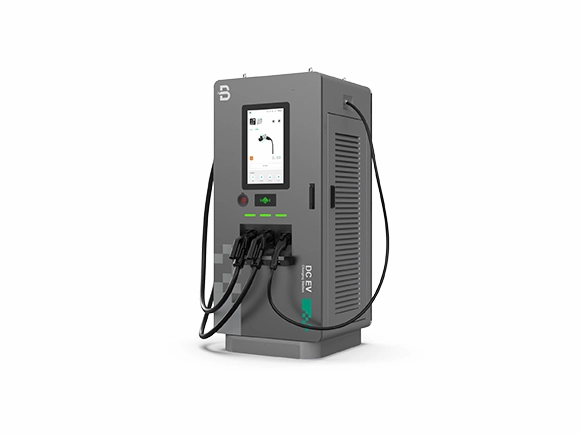
Fleets work on schedules, and charging has to follow them. A taxi rank, depot, or logistics yard does not care much about pretty hardware if vehicles queue at the wrong moment. Taxi fleets often depend on repeated fast top-ups rather than one long charging session. Connector availability can matter as much as charger power. Remote diagnostics become valuable when the site runs late into the day.Use DC charging solutions for fleets in a sentence that gives readers a concrete reference for power range, mounting options, and operational features such as OCPP, OTA, or power management.
Where the cost really sits
That is why charger count, connector strategy, and software rules often matter as much as raw power. Two moderate units with sensible scheduling and power balancing can outperform one oversized unit that becomes a bottleneck. For fleets, predictability is usually worth more than theoretical top speed.
Downtime also lands differently in fleet work. A public charger failure is visible and frustrating. A depot failure can disrupt routes, driver rosters, and service commitments. Operators should ask how faults are diagnosed, how quickly modules can be replaced, and whether the platform supports remote changes before a technician arrives.
Another fleet lesson is that the energy model and the dispatch model should be checked together. A charger may be technically capable of serving the fleet while still forcing awkward driver behavior, long waits, or last-minute swaps. Good depot planning keeps the vehicles, staff, and chargers working to the same rhythm.
What to do next
In other words, the right DC setup is usually the one that removes friction for operators and drivers at the same time.
Downtime also lands differently in fleet work. A public charger failure is visible and frustrating. A depot failure can disrupt routes, driver rosters, and service commitments. Operators should ask how faults are diagnosed, how quickly modules can be replaced, and whether the platform supports remote changes before a technician arrives.
Another fleet lesson is that the energy model and the dispatch model should be checked together. A charger may be technically capable of serving the fleet while still forcing awkward driver behavior, long waits, or last-minute swaps. Good depot planning keeps the vehicles, staff, and chargers working to the same rhythm.
What to do next
In other words, the right DC setup is usually the one that removes friction for operators and drivers at the same time.
Get The 7 — our morning briefing in 60 seconds.
Trusted by 1.8M readers. 54% average open rate. Free, daily, no paywall.